

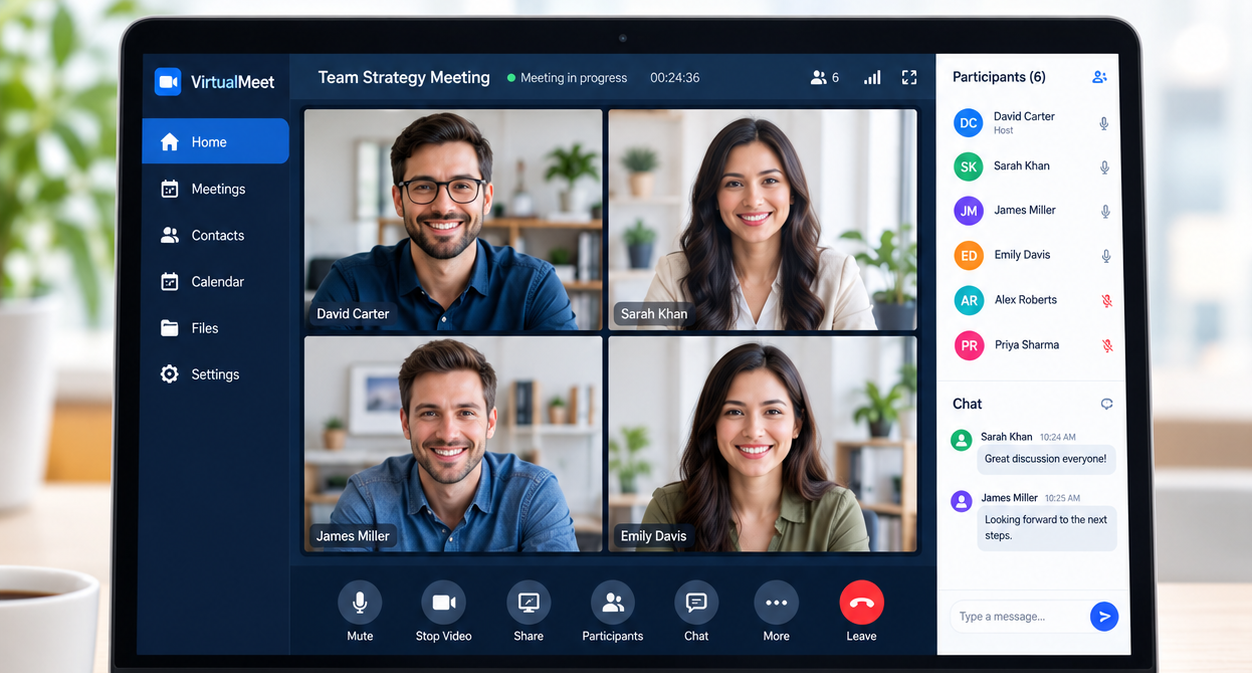
Remote work has transformed how teams collaborate, and virtual meetings have become the backbone of daily communication for distributed organizations. Whether you are leading a standup from your home office or coordinating a cross time zone project review, mastering Virtual Meeting Best Practices for Remote Teams is no longer optional. It is a core professional skill that directly impacts productivity, team morale, and business outcomes.
Research shows that remote workers attend 50% more meetings than office workers, and the average employee sits through more than 10 virtual meetings each week. With meeting volume rising and video call fatigue affecting nearly half of remote professionals, the need for intentional, structured virtual meetings has never been greater.
This guide breaks down the most effective virtual meeting strategies for remote teams, covering everything from preparation checklists to expert facilitation tips, common mistakes to avoid, and the best tools to support seamless online collaboration. By the end of this article, you will have a practical framework you can apply immediately to every virtual meeting you host or attend.
What Makes a Virtual Meeting Successful?
A successful virtual meeting is not measured by how long it lasts or how many people attend. It is defined by productive conversations, active participation, and clear outcomes. The best virtual meetings share a set of common characteristics: a clear agenda, reliable audio and video, active engagement from every participant, inclusive hybrid collaboration, and documented action items with next steps. When these elements come together, meetings become efficient, engaging, and genuinely valuable for everyone involved.
The challenge is that How to Make Online Meetings More Productive requires more than just opening a video link and hoping for the best. It demands deliberate planning, the right technology, and a shared understanding of etiquette across the entire team. The sections below provide a complete framework for achieving exactly that.
Virtual Meeting Best Practices Checklist
Use this checklist as a quick reference before, during, and after every online meeting.
Before the Meeting
- Written purpose and desired outcome defined
- Agenda with topic owners and time allocations shared at least 24 hours ahead
- Required reading attached and clearly labeled
- Attendee list limited to essential participants with optional status for others
- Time slot checked for fairness across all time zones
- Meeting link, dial in details, and access permissions confirmed
- Facilitator, note taker, and timekeeper roles assigned
- Camera, microphone, and screen sharing tested
During the Meeting
- Started on time with a brief purpose statement and agenda review
- Ground rules for chat, raise hand, and muting stated
- Cameras on where feasible, microphones muted when not speaking
- Every participant invited to contribute at least once
- Parking lot maintained for off agenda items
- Time checks provided at the midpoint and five minutes before the end
- Decisions and action items captured live in a shared document
- Meeting closed with a recap of next steps
After the Meeting
- Summary with decisions and action items distributed the same day
- Recording and notes posted in a searchable location
- Tasks updated in the project management tool
- Feedback collected on meeting value and format
- Previous action items reviewed before the next session
Do’s and Don’ts of Virtual Meeting Etiquette
Following clear do’s and don’ts helps every team member understand expectations and contributes to a smoother, more respectful meeting culture.
Do’s
Do prepare as thoroughly as you would for an in person meeting. Review the agenda, gather your notes, and have relevant documents open before the call begins. Preparation signals respect for everyone’s time.
Do use a dedicated headset or conference microphone. Audio quality matters more than video quality for effective communication. Missed words increase fatigue and reduce understanding over time. A wired headset reduces dropouts and latency compared to built in laptop speakers.
Do frame your camera at eye level. Position your camera so you are framed from mid torso to head comfortably. This angle feels natural and keeps your face clear for others.
Do manage your environment. Close unnecessary browser tabs, silence phone notifications, and inform household members that you are in a meeting. These small steps prevent embarrassing interruptions.
Do designate a meeting facilitator. For larger or more complex meetings, having someone whose sole job is to keep the agenda on track, encourage quieter voices, and manage time can make a significant difference in meeting flow and outcomes.
Don’ts
Don’t multitask during virtual meetings. Responding to emails, scrolling through social media, or working on unrelated tasks is not only disrespectful to other participants but also reduces your ability to contribute meaningfully. If you would not do it in a face to face meeting, do not do it in a virtual one.
Don’t eat during a meeting unless the invitation specifically mentions a meal. Even then, avoid anything that creates distracting sounds or requires visible cleanup.
Don’t join without testing your setup. Logging in on time but spending the first few minutes fixing audio issues delays everyone and sets a chaotic tone for the meeting.
Don’t make private meeting links public. Distribute meeting links only to intended participants through secure channels. Never post them on social media or public forums where uninvited guests could join.
Don’t move around excessively when speaking. Constant motion triggers camera refocus and distracts other participants. Try to stay relatively still and centered in the frame while you have the floor.
Pros and Cons of Virtual Meetings for Remote Teams
Understanding the advantages and limitations of virtual meetings helps teams make smarter decisions about when and how to meet online.
Pros
Cost efficiency stands out as a major advantage. Virtual meetings eliminate travel expenses, venue rental costs, and the time lost to commuting. This allows organizations to redirect resources toward more impactful areas.
Flexibility and accessibility are unmatched. Team members can join from anywhere, making it easier to include diverse perspectives and accommodate different schedules and time zones.
Environmental impact is significantly reduced. By minimizing the need for physical travel, virtual meetings lower an organization’s carbon footprint.
Scalability allows meetings to expand from a quick two person check in to a large international webinar without logistical constraints. Recorded sessions ensure that important information is preserved for those who could not attend live.
Cons
Video call fatigue is a genuine concern. Nearly 50% of remote professionals report significant fatigue from virtual meetings, which can reduce engagement and overall productivity.
Technical issues can derail even the best planned meeting. Internet connectivity problems, audio glitches, and platform incompatibilities create friction that wastes time and frustrates participants.
Nonverbal cues are harder to read in a virtual setting. Subtle body language, eye contact, and spatial dynamics are diminished or absent, which can lead to misunderstandings and weaker interpersonal connections.
Multitasking temptation is higher in virtual meetings. When participants are not physically present in the same room, the pull of email, chat, and other distractions is stronger, leading to divided attention and reduced contribution.
Frequently Asked Questions About Virtual Meetings
What is the ideal length for a virtual meeting?
Research suggests that virtual meetings should generally be kept to 30 to 50 minutes to maintain attention and reduce fatigue. For complex topics that require more time, schedule short breaks every 45 to 60 minutes. Organizations increasingly encourage fewer, more purposeful meetings rather than longer sessions.
How can I keep remote team members engaged during virtual meetings?
Engagement starts with a clear agenda and a defined purpose. Use interactive features like polls, breakout rooms, and collaborative documents to invite participation. Address participants by name, ask open ended questions, and create space for quieter team members to contribute. Rotating facilitation responsibilities among team members can also keep energy levels high.
Should cameras be mandatory in virtual meetings?
Camera use should be guided by team norms rather than rigid rules. For small group discussions, stakeholder meetings, and interviews, cameras on can improve connection and trust. For large all hands meetings, working sessions, or listen only updates, cameras can be optional to reduce bandwidth strain and video fatigue. The key is to communicate expectations clearly and respect individual circumstances.
How do I handle technical issues during a virtual meeting?
Always have a backup plan. Before the meeting, test your equipment and have a technical support contact available. During the meeting, if audio or video fails, switch to audio only mode or use the chat to communicate. If a participant is experiencing persistent issues, consider recording the session and sharing it afterward so they can catch up on what they missed.
What is the best way to follow up after a virtual meeting?
Send a concise summary within 24 hours that includes key decisions, action items with owners and deadlines, and any unresolved questions. Distribute this summary to all participants and relevant stakeholders who could not attend. Following up ensures accountability and keeps projects moving forward between meetings.
Final Summary
Virtual meetings are an indispensable part of remote and hybrid work, but they only deliver value when they are planned with intention and facilitated with skill. By adopting the best practices outlined in this guide, you can transform your team’s virtual meetings from obligatory calendar blocks into productive, engaging sessions that drive real results. Start with a clear purpose, prepare thoroughly, embrace the right tools, and always follow up with action. Your team’s time and focus are your most valuable resources, and every well run virtual meeting is an investment in both.